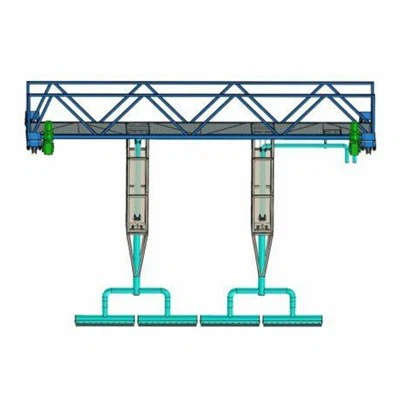
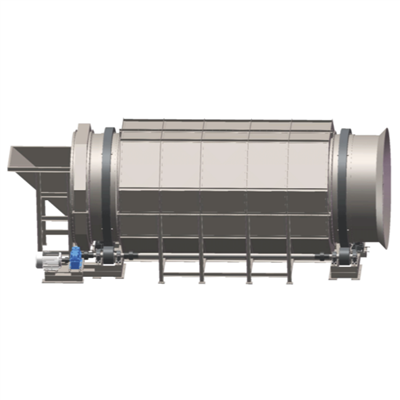
Hey there! I'm a supplier of Rotary Disc Filters, and today I want to dig deep into a super important topic: What is the influence of pressure on the filtration rate?
Let's start with the basics. Filtration is a process that we use to separate solids from liquids or gases. In the world of wastewater treatment and various industrial processes, Rotary Disc Filters are pretty popular. They work by passing a fluid through a filter medium, and the solids get trapped while the clean fluid passes through.
Now, pressure plays a huge role in how fast this filtration process happens. You see, pressure is like the driving force behind the movement of the fluid through the filter. When you increase the pressure, you're essentially pushing the fluid harder through the filter medium.
Think of it like squeezing a sponge. If you just gently press on a sponge soaked in water, the water will come out slowly. But if you really squeeze it hard, the water gushes out much faster. It's the same principle with filtration. When you crank up the pressure, more fluid can pass through the filter in a given amount of time, which means the filtration rate goes up.
But it's not all that simple. There are a bunch of factors that can affect how pressure impacts the filtration rate in a Rotary Disc Filter.
One major factor is the nature of the filter medium. Different filter media have different pore sizes and structures. If you have a filter medium with really small pores, increasing the pressure might not always lead to a proportional increase in the filtration rate. At some point, the small pores can get clogged with the solids, and even if you increase the pressure, the fluid can't pass through easily. It's like trying to force a big ball through a tiny hole. No matter how hard you push, it's just not going to work well.
Another thing to consider is the characteristics of the fluid being filtered. If the fluid is very viscous, like thick oil, it's going to be more resistant to flow. Increasing the pressure can help, but you might need a much higher pressure compared to a less viscous fluid like water to achieve the same filtration rate.
The type and amount of solids in the fluid also matter. If there are a lot of solids, they can build up on the filter medium quickly, forming a cake layer. This cake layer can act as an additional resistance to the flow of the fluid. At first, increasing the pressure can help push the fluid through this cake layer, but as the cake layer gets thicker, the pressure might not be enough to maintain a high filtration rate.


Let's talk about some real - world implications of all this. In a wastewater treatment plant, for example, maintaining an optimal filtration rate is crucial. If the filtration rate is too low, it can slow down the entire treatment process, and the plant might not be able to handle the incoming wastewater efficiently. On the other hand, if you increase the pressure too much, you could damage the filter medium or cause other problems in the system.
As a Rotary Disc Filter supplier, I've seen firsthand how important it is to find the right balance. We often work with our customers to understand their specific needs, the characteristics of the fluid they're filtering, and the operating conditions. Based on that, we can recommend the best settings for pressure to achieve an optimal filtration rate.
Now, in addition to Rotary Disc Filters, there are other equipment that are often used in wastewater treatment and related processes. For example, a Chlorine Dioxide Generator is used to produce chlorine dioxide, which is a powerful disinfectant. It can be used to kill bacteria and other harmful microorganisms in the water after the filtration process.
A Peripheral Driving Sludge Thickener is another useful piece of equipment. It's used to thicken the sludge that is removed during the filtration process. This helps in reducing the volume of the sludge, which makes it easier to handle and dispose of.
And then there's the DAF Machine, or Dissolved Air Flotation Machine. It uses tiny air bubbles to separate suspended solids from the water. It can be used in combination with a Rotary Disc Filter to improve the overall efficiency of the wastewater treatment process.
So, how do you determine the right pressure for your Rotary Disc Filter? Well, it usually involves some testing. You start by running the filter at different pressures and measuring the filtration rate. You also need to monitor the quality of the filtered fluid and the condition of the filter medium. Over time, you can establish a relationship between pressure and filtration rate for your specific application.
It's also important to keep in mind that the pressure should be adjusted gradually. Sudden changes in pressure can cause problems like damage to the filter medium or uneven flow distribution.
In conclusion, pressure has a significant influence on the filtration rate of a Rotary Disc Filter. But it's a complex relationship that is affected by many factors. As a supplier, we're always here to help our customers figure out the best way to optimize their filtration processes. Whether you're dealing with a small - scale industrial application or a large - scale wastewater treatment plant, we can provide the right equipment and advice.
If you're in the market for a Rotary Disc Filter or any of the other equipment I mentioned, don't hesitate to reach out. We're ready to have a chat and discuss how we can meet your specific needs. Let's work together to make your filtration process as efficient as possible.
References
- "Filtration Principles and Practices" by Amyn S. Teja
- "Wastewater Treatment: An Overview" by Environmental Protection Agency