As a supplier of Rotating Drum Screens, I often get asked whether a rotating drum screen can be used for wet screening. This question is not only relevant to potential customers but also crucial for understanding the full capabilities of our equipment. In this blog post, I'll delve into the technical aspects, advantages, and limitations of using a rotating drum screen for wet screening.
Technical Feasibility of Wet Screening with Rotating Drum Screens
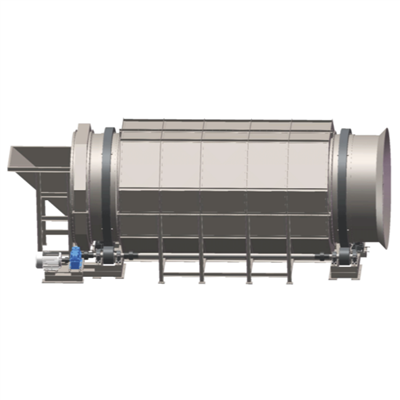
A rotating drum screen is a cylindrical screening device that rotates around its axis. The screen surface is usually made of perforated metal, wire mesh, or wedge wire, which allows the separation of solids from liquids based on particle size. When it comes to wet screening, the key factor is the ability of the screen to handle the flow of liquid and the interaction between the wet particles and the screen surface.
The design of a rotating drum screen is well - suited for wet screening. The rotation of the drum helps to keep the screen surface clean by preventing the build - up of solids. As the drum rotates, the wet material is continuously agitated, which promotes the passage of liquid through the screen openings. The centrifugal force generated by the rotation also aids in the separation process, pushing the liquid and smaller particles through the screen while retaining the larger solids inside the drum.
The choice of screen media is also important for wet screening. For example, wedge wire screens are often preferred in wet applications because they have a self - cleaning effect. The V - shaped profile of the wires allows the particles to be easily washed off the screen surface, reducing the risk of clogging. Perforated metal screens can also be used, but they may require more frequent cleaning in wet screening operations.
Advantages of Using Rotating Drum Screens for Wet Screening
- High Efficiency: Rotating drum screens can handle large volumes of wet material with relatively high efficiency. The continuous rotation of the drum ensures a steady flow of material through the screen, and the separation process is carried out in a continuous manner. This makes them suitable for industrial applications where high throughput is required.
- Versatility: They can be used for a wide range of wet screening applications, including the separation of solids from liquids in industries such as mining, wastewater treatment, and food processing. For instance, in the mining industry, rotating drum screens can be used to separate valuable minerals from slurry. In wastewater treatment, they can remove large solids from sewage before further treatment.
- Low Maintenance: Compared to some other screening equipment, rotating drum screens have relatively low maintenance requirements. The self - cleaning effect of the screen media and the simple mechanical design of the drum reduce the need for frequent manual cleaning and repair. This results in lower operating costs over the long term.
- Customizability: We can customize the rotating drum screens according to the specific requirements of the wet screening application. This includes the choice of screen size, drum diameter, and rotation speed. For example, if the application requires a fine separation of particles, we can provide a screen with smaller openings. If a higher throughput is needed, we can increase the drum diameter or the rotation speed.
Limitations and Challenges
- Clogging: Although rotating drum screens are designed to be self - cleaning, clogging can still occur, especially when dealing with sticky or fibrous materials. In such cases, additional cleaning mechanisms may be required, such as backwashing or the use of brushes.
- Particle Size Limitations: The efficiency of wet screening with a rotating drum screen may be affected by the particle size distribution of the material. If the material contains a large proportion of particles close to the size of the screen openings, the separation efficiency may decrease. In some cases, pre - screening or classification of the material may be necessary to improve the performance of the rotating drum screen.
- Corrosion: In wet screening applications, the screen and other components of the rotating drum screen are exposed to moisture and potentially corrosive substances. This requires the use of corrosion - resistant materials, such as stainless steel, to ensure the longevity of the equipment.
Applications in Different Industries
- Paper and Pulp Industry: In the paper and pulp industry, rotating drum screens can be used for wet screening in several processes. For example, they can be used to separate wood chips from water in the Chip Washer process. The rotating drum screen can remove any large debris or oversized chips from the wet wood chips, ensuring a more uniform feed for the subsequent processing steps. They can also be used in the screening of pulp before it is sent to the Horizontal Reactor or Rotary Drum Digester to remove any remaining impurities.
- Food Processing Industry: In the food processing industry, rotating drum screens are used for wet screening of fruits, vegetables, and grains. For example, they can be used to separate the pulp from the juice in fruit processing. The wet fruit pulp is fed into the drum screen, and the juice passes through the screen while the pulp is retained inside the drum. This helps to improve the quality of the juice by removing any solid particles.
- Wastewater Treatment: In wastewater treatment plants, rotating drum screens play a crucial role in the primary treatment stage. They are used to remove large solids, such as rags, plastics, and debris, from the incoming sewage. The wet sewage is passed through the rotating drum screen, and the solids are collected and removed for further disposal. This helps to protect the downstream treatment equipment from damage and clogging.
Case Studies
Let's take a look at a real - world example of using a rotating drum screen for wet screening in the mining industry. A mining company was facing challenges in separating a particular mineral from the slurry. The slurry contained a mixture of fine and coarse particles, and traditional screening methods were not efficient enough.


We provided a custom - designed rotating drum screen with a wedge wire screen media. The screen was designed to have a specific opening size to separate the valuable mineral from the rest of the slurry. The rotating drum screen was installed in the processing plant, and it was able to handle the large volume of wet slurry with high efficiency. The continuous rotation of the drum ensured that the screen surface remained clean, and the separation process was carried out smoothly. As a result, the mining company was able to increase the recovery rate of the valuable mineral and improve the overall productivity of the plant.
Conclusion
In conclusion, rotating drum screens can indeed be used for wet screening, and they offer several advantages in terms of efficiency, versatility, and low maintenance. However, like any screening equipment, they also have some limitations and challenges that need to be addressed. By choosing the right screen media, optimizing the design of the drum screen, and implementing appropriate maintenance procedures, the performance of rotating drum screens in wet screening applications can be maximized.
If you are considering using a rotating drum screen for your wet screening needs, we are here to help. Our team of experts can provide you with customized solutions based on your specific requirements. Whether you are in the mining, wastewater treatment, paper and pulp, or food processing industry, we have the experience and expertise to deliver high - quality rotating drum screens. Contact us today to discuss your project and explore how our rotating drum screens can meet your wet screening requirements.
References
- Smith, J. (2018). "Screening Technology in Industrial Applications." Journal of Industrial Engineering, 25(3), 123 - 135.
- Brown, A. (2019). "Advances in Wet Screening Equipment." Proceedings of the International Conference on Separation Technology, 45 - 52.
- Johnson, R. (2020). "Case Studies in Rotating Drum Screen Applications." Industrial Process Magazine, 15(2), 67 - 74.