Hey there! As a supplier of rotating drum screens, I often get asked about one crucial aspect: the power consumption of these machines. In this post, I'm gonna break down this topic in a way that's easy to understand, so you can make an informed decision when considering a rotating drum screen for your operations.
Understanding the Basics of a Rotating Drum Screen
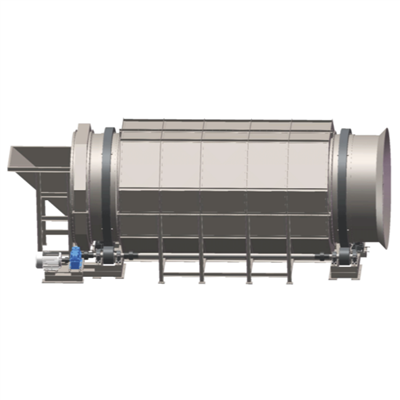
First off, let's quickly go over what a rotating drum screen is. It's a piece of equipment commonly used in various industries, like wastewater treatment, pulp and paper, and food processing. The main function of a rotating drum screen is to separate solids from liquids. It consists of a cylindrical drum with a perforated or mesh surface. As the drum rotates, the liquid passes through the holes, while the solids are retained on the surface and eventually removed.
Factors Affecting Power Consumption
Now, let's dive into what makes the power consumption of a rotating drum screen go up or down. There are several key factors to consider:
1. Screen Size and Design
The size of the drum screen is a big deal. Larger drum screens generally require more power to rotate. That's because they have a larger surface area and more mass to move. The design of the screen, including the type of mesh or perforations, can also impact power consumption. A finer mesh may cause more resistance to the flow of liquid and solids, which requires more power to keep the drum rotating smoothly.
2. Rotational Speed
How fast the drum rotates plays a significant role in power consumption. Higher rotational speeds mean more energy is needed to keep the drum spinning. However, sometimes a higher speed is necessary to achieve the desired separation efficiency. You gotta find that sweet spot where you're getting good results without using excessive power.
3. Material Characteristics
The nature of the material being screened also affects power consumption. If you're dealing with thick, viscous liquids or solids that are difficult to separate, the drum screen will have to work harder. This means more power is required to overcome the resistance and keep the screening process going. On the other hand, if the material is easy to screen, power consumption will be lower.


4. Motor Efficiency
The efficiency of the motor used to drive the drum screen is crucial. A high - efficiency motor will convert more of the electrical energy into mechanical energy, which means less energy is wasted as heat. When choosing a rotating drum screen, it's important to look for models with efficient motors to reduce power consumption in the long run.
Calculating Power Consumption
Calculating the power consumption of a rotating drum screen isn't an exact science, but there are some general guidelines. Most manufacturers provide estimated power consumption data based on the size and specifications of their screens.
The power consumption (P) can be estimated using the following formula (this is a simplified version, and actual calculations may be more complex):
P = (T × ω) / η
where T is the torque required to rotate the drum, ω is the angular velocity of the drum, and η is the efficiency of the motor and the mechanical drive system.
Torque is affected by the factors we discussed earlier, like screen size and material characteristics. Angular velocity is related to the rotational speed of the drum.
Real - World Examples
Let's look at a couple of real - world scenarios to see how power consumption can vary.
Wastewater Treatment Plant
In a medium - sized wastewater treatment plant, a rotating drum screen with a diameter of 1.5 meters and a length of 3 meters might be used. If the drum rotates at a speed of 2 revolutions per minute and the motor has an efficiency of 90%, the estimated power consumption could be around 1.5 - 2 kilowatts. However, if the wastewater contains a high amount of solids or is very viscous, the power consumption could increase to 2 - 3 kilowatts.
Pulp and Paper Industry
In the pulp and paper industry, rotating drum screens are used to separate fibers and other solids from the pulp. If you're using a larger drum screen, say with a diameter of 2 meters and a length of 4 meters, and it needs to rotate at a relatively high speed of 5 revolutions per minute to achieve efficient separation, the power consumption could be in the range of 3 - 5 kilowatts. The power consumption can also be affected by the type of pulp, for example, Pulp Black Liquor has different characteristics compared to regular pulp, which can lead to variations in power requirements.
Energy - Saving Tips
If you're concerned about power consumption, here are some tips to help you reduce it:
- Optimize Rotational Speed: Find the optimal rotational speed for your specific application. Sometimes, a slightly lower speed can still achieve good separation results while using less power.
- Regular Maintenance: Keep your drum screen well - maintained. A dirty or worn - out screen can cause more resistance, which increases power consumption. Regular cleaning and replacement of worn parts can help keep the machine running efficiently.
- Upgrade to an Efficient Motor: If your current motor is old or inefficient, consider upgrading to a more energy - efficient model. This can significantly reduce power consumption in the long term.
Related Equipment and Their Impact
Rotating drum screens are often part of a larger system in industries like pulp and paper. Other equipment in the system can also impact the overall power consumption. For example, Screw Digester is used in the pulp and paper industry to break down wood chips into pulp. The operation of a screw digester can affect the characteristics of the pulp that goes into the rotating drum screen. If the screw digester is not operating efficiently, it may produce pulp that is more difficult to screen, increasing the power consumption of the rotating drum screen.
Similarly, a Chip Washer is used to clean wood chips before they enter the pulping process. If the chip washer doesn't clean the chips effectively, the presence of dirt and other impurities in the pulp can make the screening process more difficult and increase the power consumption of the rotating drum screen.
Conclusion
So, the power consumption of a rotating drum screen depends on several factors, including screen size, rotational speed, material characteristics, and motor efficiency. By understanding these factors, you can make smarter decisions about choosing the right drum screen for your needs and how to operate it efficiently.
If you're in the market for a rotating drum screen or have questions about power consumption and efficiency, don't hesitate to reach out for a discussion. We're here to help you find the best solution for your operations and make sure you get the most out of your investment.
References
- Perry, R. H., & Green, D. W. (Eds.). (2008). Perry's Chemical Engineers' Handbook. McGraw - Hill.
- Metcalf & Eddy, Inc. (2014). Wastewater Engineering: Treatment and Resource Recovery. McGraw - Hill.