Hey there! As a supplier of horizontal reactors, I often get asked if these nifty pieces of equipment can be used for catalytic reactions. Well, let's dive right into it and find out.
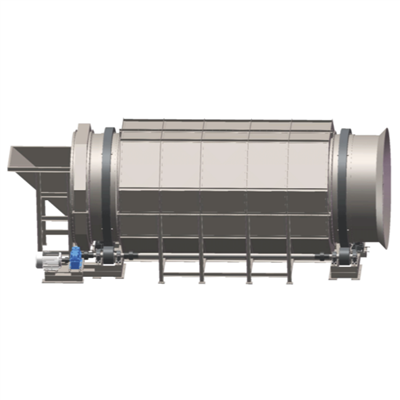
First off, what exactly is a horizontal reactor? It's a type of vessel where chemical reactions take place. Unlike vertical reactors, horizontal reactors are laid out horizontally, which gives them some unique advantages. They're great for handling large volumes of reactants and can be easily integrated into existing production lines.
Now, onto the big question: can a horizontal reactor be used for catalytic reactions? The short answer is yes! Catalytic reactions involve using a catalyst to speed up a chemical reaction without being consumed in the process. Horizontal reactors are well - suited for this kind of work for several reasons.
One of the main benefits is the excellent mixing capabilities. In a horizontal reactor, the reactants and the catalyst can be mixed more evenly. The shape of the reactor allows for a more uniform distribution of the catalyst throughout the reaction mixture. This is crucial because for a catalytic reaction to be efficient, the catalyst needs to come into contact with the reactants as much as possible. When the mixing is good, the reaction rate can increase significantly, leading to higher yields.
Another advantage is the ease of heat transfer. Catalytic reactions often generate or absorb heat, and controlling the temperature is vital. Horizontal reactors usually have a larger surface - area - to - volume ratio compared to some vertical reactors. This means that heat can be transferred more effectively, either to remove excess heat from an exothermic reaction or to supply heat for an endothermic one. Maintaining the right temperature ensures that the catalyst remains active and the reaction proceeds smoothly.
Let's talk about some specific applications. In the chemical industry, horizontal reactors are used in the production of various chemicals through catalytic processes. For example, in the synthesis of polymers, a catalyst is often used to initiate and control the polymerization reaction. A horizontal reactor can provide a stable environment for this reaction, allowing for the production of high - quality polymers with consistent properties.
In the petrochemical industry, catalytic cracking is a crucial process. This involves breaking down large hydrocarbon molecules into smaller, more valuable ones using a catalyst. Horizontal reactors can handle the high - temperature and high - pressure conditions required for this reaction. They also allow for continuous operation, which is important for large - scale production.
Now, let's take a look at some related equipment in the industrial field. If you're in the paper industry, you might be interested in the Pressure Screen in Paper Industry. This equipment is used to separate and clean pulp fibers, ensuring the quality of the paper produced. Another useful piece of equipment is the Belt Conveyor Pulp and Paper. It's used to transport pulp and paper materials within the production facility, making the process more efficient. And if you're dealing with wood chips in the paper - making process, the Chip Washer can help clean the chips before they are processed further.
Of course, like any piece of equipment, horizontal reactors for catalytic reactions also have some considerations. The design of the reactor needs to be carefully optimized for the specific catalytic reaction. The choice of materials is important to ensure that the reactor can withstand the chemical and physical conditions of the reaction. The catalyst also needs to be properly selected and maintained. Over time, the catalyst may deactivate, and it may need to be replaced or regenerated.
When it comes to the operation of a horizontal reactor for catalytic reactions, it's essential to have a good control system. This system can monitor and adjust parameters such as temperature, pressure, flow rate, and catalyst feed rate. By keeping these parameters in check, the reaction can be optimized for maximum efficiency.
In terms of cost - effectiveness, horizontal reactors can be a great investment. Although the initial purchase cost may be relatively high, the long - term benefits in terms of increased productivity, higher yields, and lower operating costs can outweigh the upfront expense. They also have a relatively long lifespan if properly maintained, providing a reliable solution for catalytic reactions over many years.
If you're in an industry that involves catalytic reactions and you're considering a horizontal reactor, it's important to do your research. Look at different models and manufacturers, and compare their features and prices. You should also consider factors such as the technical support offered by the supplier and the availability of spare parts.
As a horizontal reactor supplier, I'm always happy to help customers find the right solution for their catalytic reaction needs. Whether you're a small - scale laboratory or a large - scale industrial plant, we can provide you with a horizontal reactor that meets your specific requirements.
If you're interested in learning more about our horizontal reactors or have any questions about using them for catalytic reactions, don't hesitate to get in touch. We can have a detailed discussion about your project, and I'm sure we can find a solution that works for you. Contact us today to start the conversation about how our horizontal reactors can improve your catalytic reaction processes.
References


- Levenspiel, O. (1999). Chemical Reaction Engineering. Wiley.
- Smith, J. M., Van Ness, H. C., & Abbott, M. M. (2005). Introduction to Chemical Engineering Thermodynamics. McGraw - Hill.