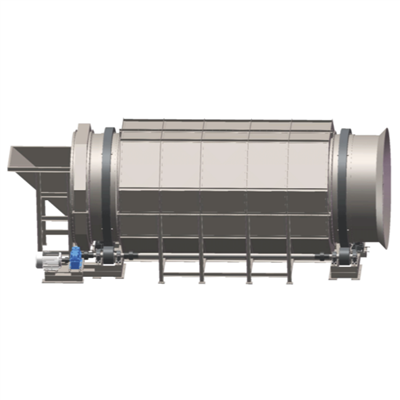
Hey there! As a supplier of Rotating Drum Screens, I often get asked about the screening efficiency of these nifty machines. So, let's dive right in and explore what screening efficiency is all about when it comes to rotating drum screens.
First off, what exactly is screening efficiency? In simple terms, it's a measure of how well a rotating drum screen separates the desired materials from the unwanted ones. It's like having a super - picky bouncer at a club, only allowing the right people (or in this case, particles) in.
The screening efficiency is usually expressed as a percentage. A high screening efficiency means that the drum screen is doing a great job of getting rid of the stuff you don't want and keeping the good stuff. For example, if you're using a rotating drum screen to separate sand from gravel in a construction project, a high - efficiency screen will ensure that most of the sand passes through the screen while the gravel stays behind.
There are a few factors that can affect the screening efficiency of a rotating drum screen. Let's take a look at them one by one.
1. Screen Mesh Size
The size of the holes in the screen mesh is a crucial factor. If the mesh size is too large, then even the larger particles that you want to keep out might pass through. On the other hand, if the mesh size is too small, the screen can get clogged easily, reducing the flow rate and the overall screening efficiency. It's all about finding that sweet spot. For instance, if you're screening small seeds from a mixture, you'll need a much finer mesh compared to when you're screening rocks.
2. Rotation Speed
The speed at which the drum rotates also plays a big role. If the rotation speed is too slow, the materials might not move through the screen fast enough, and you'll end up with a bottleneck. But if it's too fast, the materials might just be flung around without getting properly screened. You have to adjust the rotation speed according to the type of materials you're dealing with. For example, if you're screening a sticky substance, a slower rotation speed might be better to allow the material to have more contact with the screen.
3. Material Characteristics
The nature of the materials being screened is another important aspect. Things like particle size, shape, density, and moisture content can all impact the screening efficiency. For example, if the particles are very irregular in shape, they might not pass through the screen as easily as round particles. And if the material is very wet, it can clump together and clog the screen.
4. Screen Length and Diameter
The dimensions of the rotating drum screen matter too. A longer drum gives the materials more time to be screened, which can increase the efficiency. Similarly, a larger diameter can provide more surface area for screening. But of course, you have to balance these factors with the available space and the cost of the equipment.


Now, let's talk about how we can improve the screening efficiency of a rotating drum screen.
One of the easiest ways is to pre - screen the materials. By removing the large chunks or the very fine particles before they enter the drum screen, you can reduce the chances of clogging and make the screening process more efficient. Another tip is to use a self - cleaning mechanism. Some of our rotating drum screens come with built - in self - cleaning features that can prevent the screen from getting blocked.
We also offer a variety of additional equipment that can work in conjunction with the rotating drum screen to enhance the overall screening process. For example, check out our Dual Mesh Rotary Drum Pulp Press. This machine can help in further separating and pressing the materials after the initial screening.
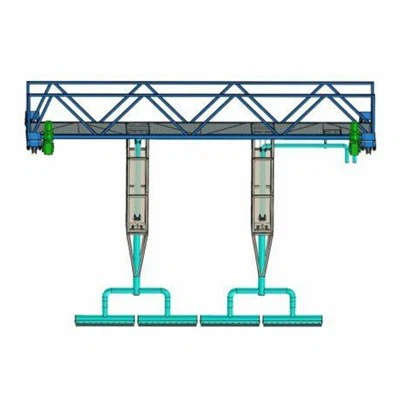
If you're looking for a different type of screening solution, our Swing Screen might be a great option. It has a unique swinging motion that can provide a more thorough screening for certain types of materials. And for those in the paper - making industry, our Screw Digester can be used in the pre - processing stage to prepare the materials for better screening.
As a supplier, we've seen firsthand how the right screening equipment can make a huge difference in various industries. Whether it's in mining, construction, agriculture, or paper - making, a high - efficiency rotating drum screen can save you time and money by improving the quality of your end product.
If you're in the market for a rotating drum screen or any of our related equipment, don't hesitate to reach out. We can help you choose the right model based on your specific needs and provide you with all the technical support you need. Whether you're a small - scale operation or a large industrial company, we've got a solution for you.
In conclusion, the screening efficiency of a rotating drum screen depends on multiple factors, but with the right setup and equipment, you can achieve excellent results. So, if you're looking to improve your screening process, give us a chance to show you what our products can do.
References
- Smith, J. (2020). "Screening Technology in Industrial Processes". Industrial Press.
- Johnson, A. (2019). "Optimizing Screening Efficiency". Mining Journal.
- Brown, C. (2021). "Advances in Paper - Pulp Screening". Paper Industry Review.