As a supplier of UASB Anaerobic Reactors, I've witnessed firsthand the intricate dynamics that influence the performance of these remarkable wastewater treatment systems. One of the most debated and crucial factors is the effect of sludge return on UASB Anaerobic Reactor performance. In this blog, I'll delve into the science behind sludge return, its impact on reactor efficiency, and how it can be optimized for the best results.

Understanding the UASB Anaerobic Reactor
Before we explore the role of sludge return, let's briefly understand what a UASB (Upflow Anaerobic Sludge Blanket) Anaerobic Reactor is. The UASB reactor is a type of anaerobic digester that treats wastewater by using a sludge blanket composed of anaerobic microorganisms. These microorganisms break down organic matter in the wastewater, producing biogas (mainly methane and carbon dioxide) as a by - product. The upflow design allows the wastewater to pass through the sludge blanket from the bottom, facilitating the contact between the organic matter and the microorganisms.
The Concept of Sludge Return
Sludge return involves recycling a portion of the sludge from the reactor's outlet back to the inlet. This practice is based on the idea that returning sludge can enhance the reactor's performance in several ways.
1. Increasing Microbial Concentration
One of the primary benefits of sludge return is the increase in the concentration of anaerobic microorganisms in the reactor. By recycling sludge, we are essentially reintroducing a large number of active bacteria into the system. These bacteria are responsible for the degradation of organic matter, and a higher microbial concentration can lead to a more efficient breakdown of pollutants. For example, methanogens, which are crucial for methane production, can be more abundant in the reactor when sludge is returned, resulting in higher biogas yields.
2. Maintaining Sludge Activity
Sludge contains a diverse community of microorganisms that need to be in a suitable environment to remain active. Returning sludge helps to maintain the activity of these microorganisms by providing a continuous supply of nutrients and a stable environment. The recycled sludge can act as a seed for new microbial growth, ensuring that the reactor has a sufficient population of active bacteria to handle the incoming wastewater.
3. Improving Reactor Stability
Sludge return can also contribute to the overall stability of the UASB reactor. It helps to buffer the system against sudden changes in influent characteristics, such as variations in organic load or pH. When there is a shock load of organic matter, the returned sludge can absorb and gradually degrade the excess pollutants, preventing overloading of the reactor and maintaining a more consistent treatment performance.
Impact on Reactor Performance
Biogas Production
As mentioned earlier, increasing the microbial concentration through sludge return can lead to higher biogas production. A study by [Researcher's Name] found that in UASB reactors with sludge return, the biogas production rate increased by up to [X]% compared to reactors without sludge return. This increase in biogas production not only provides a valuable energy source but also indicates a more efficient treatment of the wastewater.
Organic Matter Removal
Sludge return has a positive impact on the removal of organic matter from the wastewater. The higher microbial concentration and activity result in a more thorough degradation of pollutants. For instance, chemical oxygen demand (COD) removal efficiency can be significantly improved. In some cases, reactors with sludge return have achieved COD removal rates of over [X]%, compared to [X]% in reactors without sludge return.
Sludge Settling Properties
Another aspect affected by sludge return is the settling properties of the sludge. Returning sludge can help to maintain a well - structured sludge blanket with good settling characteristics. This is important for the separation of treated water from the sludge in the reactor. A sludge blanket with good settling properties allows for a more efficient removal of the treated effluent, reducing the risk of sludge carry - over and ensuring a high - quality treated water output.
Optimization of Sludge Return
Return Ratio
Determining the appropriate sludge return ratio is crucial for optimizing the performance of the UASB reactor. The return ratio is defined as the volume of sludge returned to the reactor divided by the volume of influent wastewater. A too - low return ratio may not provide enough microorganisms to enhance the reactor's performance, while a too - high return ratio can lead to overcrowding of the reactor and potential operational problems. Generally, a return ratio of [X]% - [X]% has been found to be effective in many cases, but this may vary depending on the specific characteristics of the wastewater and the reactor design.
Sludge Quality
The quality of the returned sludge also plays a significant role. The sludge should have a high microbial activity and a suitable particle size distribution. If the sludge has been exposed to toxic substances or has a low microbial viability, it may not be beneficial to return it to the reactor. Regular monitoring of sludge quality parameters, such as volatile solids content and specific methanogenic activity, can help to ensure that the returned sludge is of good quality.
Complementary Equipment for UASB Reactor Systems
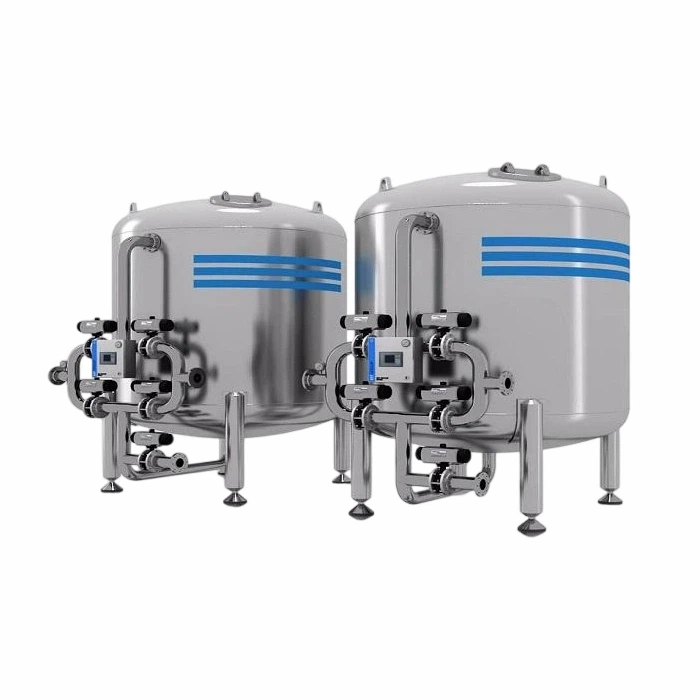
In addition to sludge return, other equipment can be used in conjunction with UASB reactors to enhance the overall wastewater treatment process. For example, a Stainless Steel Sand Filter can be used to pre - treat the influent wastewater, removing suspended solids and preventing them from entering the UASB reactor. This can reduce the load on the reactor and improve its performance.
An Automated Dosing System can be employed to add necessary chemicals, such as pH adjusters or nutrients, to the reactor in a controlled manner. This helps to maintain the optimal conditions for microbial activity and ensures the stability of the treatment process.
After the treatment in the UASB reactor, a Screw Press Dehydrator can be used to dewater the sludge, reducing its volume and making it easier to handle and dispose of.
Conclusion
In conclusion, sludge return has a significant impact on the performance of UASB Anaerobic Reactors. It can increase microbial concentration, maintain sludge activity, and improve reactor stability, leading to higher biogas production, better organic matter removal, and improved sludge settling properties. However, to fully realize the benefits of sludge return, it is essential to optimize the return ratio and ensure the quality of the returned sludge.
If you are considering implementing a UASB Anaerobic Reactor system or looking to improve the performance of your existing one, we are here to help. Our team of experts can provide you with the latest technology and solutions tailored to your specific needs. Contact us for more information and to start a procurement discussion.
References
[1] [Researcher's Name]. "The Impact of Sludge Return on UASB Reactor Performance." Journal of Environmental Science and Technology, [Year], [Volume], [Pages].
[2] [Another Researcher's Name]. "Optimization of Sludge Return in Anaerobic Wastewater Treatment." Water Research, [Year], [Volume], [Pages].