Hey there! If you're in the wood processing or pulp and paper industry, you know how crucial it is to keep those wood chips clean. Clean chips mean better quality pulp, fewer production issues, and ultimately, more efficient operations. Today, I'm gonna talk about how a chip washer stacks up against other chip-cleaning methods. As a chip washer supplier, I've seen firsthand the ins and outs of different cleaning approaches, so let's dive right in.
Traditional Chip Cleaning Methods
Before we get into the details of chip washers, let's take a look at some of the more traditional chip-cleaning methods that have been around for a while.


Screening
Screening is one of the most basic ways to clean chips. It involves passing the chips through a series of screens with different-sized openings. The idea is to separate the chips from larger debris like bark, knots, and other foreign objects. While screening can be effective at removing big stuff, it has its limitations. It doesn't do a great job of getting rid of smaller contaminants like dirt, sand, or fine particles. And over time, the screens can get clogged, which means you have to stop production to clean them. That's a real pain in the neck, especially if you're running a high-volume operation.
Gravity Separation
Gravity separation is another common method. It works by using the difference in density between the chips and the contaminants. You put the chips in a tank of water, and the heavier contaminants sink to the bottom while the lighter chips float on top. Then you can skim off the clean chips. This method can be pretty effective for removing heavy contaminants like stones and metal pieces. But it has some drawbacks too. It takes up a lot of space, and you need a constant supply of water. Plus, it's not very good at removing contaminants that have a similar density to the chips.
Air Classification
Air classification uses air currents to separate the chips from the contaminants. The chips are blown through a chamber, and the lighter contaminants are carried away by the air while the heavier chips fall to the bottom. This method is good for removing lightweight contaminants like dust and small pieces of bark. But it's not very effective for removing heavier contaminants, and it can be a bit tricky to control the air flow. If the air flow is too strong, you might end up losing some of the good chips along with the bad ones.
How a Chip Washer Works
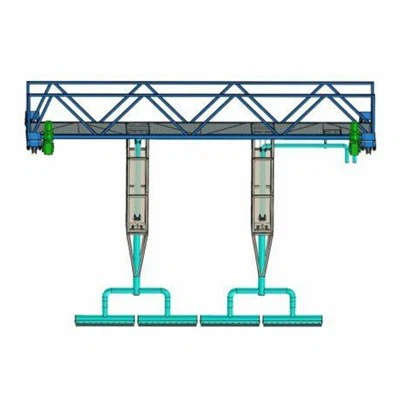
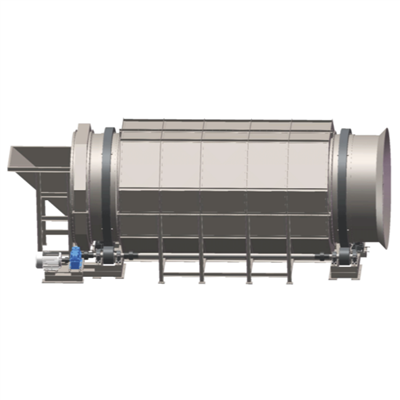
Now, let's talk about chip washers. A chip washer is a specialized piece of equipment that uses water to clean the chips. It typically consists of a rotating drum or a series of tanks where the chips are mixed with water. As the chips move through the washer, the water washes away the contaminants, leaving behind clean chips.
One of the big advantages of a chip washer is that it can remove a wide range of contaminants, from large debris to small particles. The water in the washer acts like a powerful solvent, breaking down and carrying away the dirt, sand, and other impurities. And because the chips are constantly moving and being agitated, the cleaning process is more thorough than with some of the other methods.
Another great thing about chip washers is that they're very efficient. They can handle a large volume of chips in a relatively short amount of time, which means you can keep your production line running smoothly. And because they use water, they're also environmentally friendly. You can recycle the water used in the washer, which helps to reduce your water consumption and save money.
Comparing a Chip Washer to Other Methods
So, how does a chip washer compare to the other chip-cleaning methods we talked about earlier? Let's take a closer look.
Effectiveness
When it comes to effectiveness, a chip washer is hard to beat. As I mentioned earlier, it can remove a wide range of contaminants, from large debris to small particles. In contrast, screening is only effective at removing larger debris, and gravity separation and air classification have limitations when it comes to removing certain types of contaminants. So, if you're looking for a comprehensive cleaning solution, a chip washer is the way to go.
Efficiency
In terms of efficiency, a chip washer also has the edge. It can handle a large volume of chips in a relatively short amount of time, which means you can keep your production line running smoothly. Screening, on the other hand, can be slow and labor-intensive, especially if the screens get clogged. Gravity separation and air classification also take up a lot of space and require a lot of energy to operate. So, if you're looking for a way to increase your productivity and reduce your operating costs, a chip washer is a great choice.
Cost
Cost is always a factor when it comes to choosing a chip-cleaning method. While a chip washer may have a higher upfront cost than some of the other methods, it can actually save you money in the long run. Because it's more effective and efficient, you'll need to spend less on labor, maintenance, and replacement parts. And because you can recycle the water used in the washer, you'll also save on water costs. So, when you consider the total cost of ownership, a chip washer is often the most cost-effective option.
Other Related Equipment
In addition to chip washers, there are other pieces of equipment that are commonly used in the wood processing and pulp and paper industry. For example, a Medium Consistency Refiner is used to refine the pulp after the chips have been cleaned. It helps to improve the quality of the pulp by breaking down the fibers and making them more uniform. A Rotary Drum Digester is used to cook the chips and turn them into pulp. It's a crucial step in the pulp-making process. And a Stainless Steel Reaction Vessel is used for various chemical reactions in the pulp and paper industry. These vessels are made of stainless steel to resist corrosion and ensure the quality of the products.
Conclusion
In conclusion, a chip washer is a highly effective and efficient way to clean wood chips. It offers several advantages over other chip-cleaning methods, including better cleaning performance, higher productivity, and lower operating costs. If you're in the wood processing or pulp and paper industry, I highly recommend considering a chip washer for your chip-cleaning needs.
If you're interested in learning more about our chip washers or other related equipment, or if you have any questions about how they can benefit your operation, don't hesitate to reach out. We'd be more than happy to have a chat with you and discuss your specific requirements. Let's work together to find the best solution for your business.
References
- Smith, J. (2020). Wood Processing Handbook. Publisher XYZ.
- Johnson, A. (2019). Pulp and Paper Production: Best Practices. ABC Publishing.