In the realm of industrial screening equipment, rotating drum screens play a pivotal role in numerous applications, from wastewater treatment to pulp and paper processing. One of the most common questions we, as a rotating drum screen supplier, encounter is: "Which is better, a single - layer or a multi - layer rotating drum screen?" In this blog post, we'll delve into the characteristics, advantages, and disadvantages of both types to help you make an informed decision.
Understanding Single - Layer Rotating Drum Screens
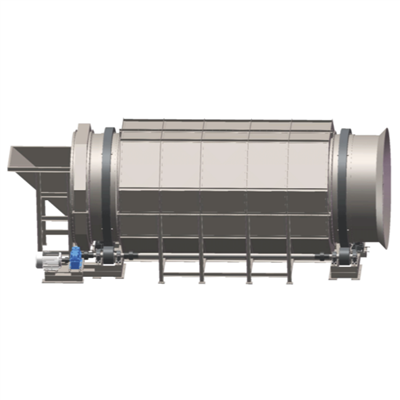
A single - layer rotating drum screen consists of a cylindrical drum covered with a single layer of screening media. This type of screen is relatively simple in design and operation. The material to be screened is fed into one end of the drum, and as the drum rotates, the smaller particles pass through the screening media, while the larger particles are retained and discharged from the other end of the drum.
Advantages of Single - Layer Rotating Drum Screens
- Simplicity and Cost - Effectiveness: Single - layer screens are generally easier to manufacture and maintain. With fewer components, the initial investment and ongoing maintenance costs are lower. This makes them an attractive option for small - to medium - scale operations with budget constraints.
- High Throughput: Since there is only one layer of screening media, the flow of material through the screen is relatively unobstructed. This allows for a high throughput rate, making single - layer screens suitable for applications where large volumes of material need to be screened quickly.
- Ease of Cleaning: Cleaning a single - layer rotating drum screen is straightforward. There is less complexity in terms of accessing and cleaning the screening media, which reduces downtime and maintenance effort.
Disadvantages of Single - Layer Rotating Drum Screens
- Limited Screening Precision: Single - layer screens are less effective at separating particles of similar sizes. They are typically used for coarse screening applications where a broad separation between large and small particles is sufficient.
- Lower Efficiency for Fine Screening: When it comes to fine screening, single - layer screens may not be able to achieve the desired level of separation. The single layer of media may not be able to capture all the fine particles, leading to a less pure final product.
Exploring Multi - Layer Rotating Drum Screens
Multi - layer rotating drum screens, as the name suggests, feature multiple layers of screening media within the drum. Each layer has a different mesh size, allowing for a more precise separation of particles based on their size.

Advantages of Multi - Layer Rotating Drum Screens
- Enhanced Screening Precision: The multiple layers of screening media enable a more accurate separation of particles into different size fractions. This is particularly useful in applications where a high degree of purity is required, such as in the pharmaceutical or food industries.
- Versatility: Multi - layer screens can be customized to meet specific screening requirements. By adjusting the mesh sizes of the different layers, they can be used for a wide range of applications, from coarse to fine screening.
- Improved Product Quality: With better separation capabilities, multi - layer screens can produce a higher - quality final product. This can lead to increased customer satisfaction and potentially higher market prices for the screened material.
Disadvantages of Multi - Layer Rotating Drum Screens
- Higher Initial Cost: The more complex design and additional components of multi - layer rotating drum screens result in a higher initial investment. This can be a significant barrier for smaller businesses or those with limited capital.
- Complex Maintenance: Cleaning and maintaining a multi - layer screen is more challenging than a single - layer screen. Accessing the different layers of screening media can be difficult, and there is a greater risk of clogging, which may require more frequent maintenance and longer downtime.
- Lower Throughput: The presence of multiple layers of screening media can impede the flow of material through the screen, resulting in a lower throughput rate compared to single - layer screens.
Application - Specific Considerations
The choice between a single - layer and a multi - layer rotating drum screen depends largely on the specific application.
Wastewater Treatment
In wastewater treatment plants, single - layer rotating drum screens are often used for preliminary screening to remove large debris such as sticks, rags, and plastics. Their high throughput and ease of maintenance make them well - suited for this application. However, for more advanced treatment processes where finer particles need to be removed, multi - layer screens may be required to achieve the desired level of water quality.
Pulp and Paper Industry
In the pulp and paper industry, both single - layer and multi - layer rotating drum screens have their uses. Single - layer screens can be used for initial screening of pulp to remove large contaminants. For more precise screening of pulp fibers, multi - layer screens are preferred. Additionally, related equipment such as the Dual Mesh Rotary Drum Pulp Press and High Consistency Refiner may be used in conjunction with rotating drum screens to optimize the pulp processing.
Mining and Aggregate Industry
In the mining and aggregate industry, single - layer rotating drum screens are commonly used for primary screening of raw materials. They can quickly separate large rocks and debris from the finer material. Multi - layer screens, on the other hand, are used for more advanced screening processes to produce different grades of aggregates with precise particle size distributions.
Conclusion
In conclusion, there is no one - size - fits - all answer to the question of whether a single - layer or a multi - layer rotating drum screen is better. Each type has its own set of advantages and disadvantages, and the choice depends on factors such as the specific application, budget, throughput requirements, and desired screening precision.
As a rotating drum screen supplier, we understand the importance of providing the right solution for your needs. Whether you require a simple and cost - effective single - layer screen or a more sophisticated multi - layer screen for high - precision screening, we can offer a range of options to suit your requirements. Our team of experts can also provide guidance on installation, maintenance, and optimization of your rotating drum screen system.
If you are interested in learning more about our rotating drum screens or would like to discuss your specific screening needs, we encourage you to reach out to us for a consultation. We look forward to working with you to find the best screening solution for your business.
References
- Perry, R. H., & Green, D. W. (Eds.). (2008). Perry's Chemical Engineers' Handbook. McGraw - Hill.
- Metcalf & Eddy, Inc. (2003). Wastewater Engineering: Treatment and Reuse. McGraw - Hill.
- Smook, G. A. (2002). Handbook for Pulp & Paper Technologists. Angus Wilde Publications.