Hey there! As a supplier of Horizontal Reactors, I've been getting a lot of questions lately about the flow patterns in these reactors. So, I thought I'd take a moment to break it down for you all.
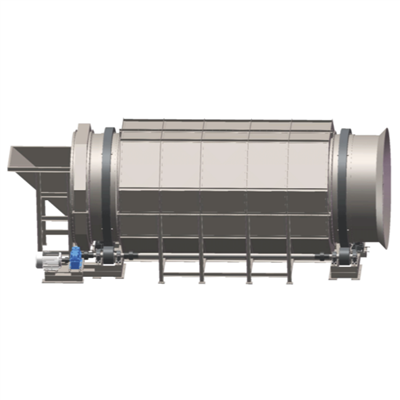
First off, let's talk about what a Horizontal Reactor is. It's a type of reactor where the reaction takes place in a horizontal vessel. These reactors are used in a wide range of industries, from chemical manufacturing to food processing. They're great because they offer a large surface area for heat transfer and can handle high volumes of material.
Now, onto the flow patterns. There are several different flow patterns that can occur in a Horizontal Reactor, and understanding these patterns is crucial for optimizing the reactor's performance.


Plug Flow Pattern
One of the most common flow patterns is the plug flow pattern. In a plug flow reactor, the fluid moves through the reactor as if it were a series of plugs. Each plug of fluid moves through the reactor without mixing with the adjacent plugs. This means that the composition and temperature of the fluid change only along the length of the reactor.
The plug flow pattern is ideal for reactions that require a specific residence time. For example, in a polymerization reaction, the monomers need to be in the reactor for a certain amount of time to form polymers of the desired molecular weight. A plug flow reactor ensures that each monomer spends the same amount of time in the reactor, resulting in a more uniform product.
However, achieving a perfect plug flow pattern in a real-world reactor is almost impossible. There are always some degree of axial dispersion, which means that there is some mixing along the length of the reactor. This can be minimized by using a long and narrow reactor design.
Completely Mixed Flow Pattern
On the other end of the spectrum is the completely mixed flow pattern. In a completely mixed reactor, the fluid is thoroughly mixed throughout the reactor. This means that the composition and temperature of the fluid are the same at every point in the reactor.
The completely mixed flow pattern is suitable for reactions that are not sensitive to residence time. For example, in a neutralization reaction, the acid and base react very quickly, and the reaction rate is not affected by how long the reactants are in the reactor. A completely mixed reactor ensures that the reactants are evenly distributed throughout the reactor, resulting in a fast and efficient reaction.
The main disadvantage of the completely mixed flow pattern is that it can lead to a lower conversion rate for some reactions. Since the reactants are continuously diluted by the product, the reaction rate decreases as the reaction progresses. This can be overcome by using a series of completely mixed reactors in cascade.
Laminar Flow Pattern
In a laminar flow pattern, the fluid moves in parallel layers, with each layer sliding over the adjacent layers. There is very little mixing between the layers, except for some molecular diffusion.
Laminar flow is common in reactors with low flow rates and high viscosity fluids. For example, in a reactor where a viscous polymer is being produced, the fluid may flow in a laminar pattern. The laminar flow pattern can be beneficial for some reactions because it allows for a more controlled reaction environment. However, it can also lead to temperature and concentration gradients within the reactor, which can affect the reaction rate and product quality.
Turbulent Flow Pattern
In contrast to laminar flow, turbulent flow is characterized by chaotic and irregular fluid motion. There is a high degree of mixing between the fluid layers, which helps to reduce temperature and concentration gradients within the reactor.
Turbulent flow is common in reactors with high flow rates and low viscosity fluids. For example, in a reactor where a gas is reacting with a liquid, the high flow rate of the gas can create a turbulent flow pattern. The turbulent flow pattern is beneficial for reactions that require good mixing and heat transfer. However, it can also lead to increased energy consumption due to the higher pressure drop in the reactor.
Influence of Reactor Design on Flow Patterns
The flow pattern in a Horizontal Reactor is not only determined by the fluid properties and flow rate but also by the reactor design. Here are some factors that can influence the flow pattern:
- Reactor Length and Diameter: As mentioned earlier, a long and narrow reactor design can help to achieve a plug flow pattern. On the other hand, a short and wide reactor design is more likely to result in a completely mixed flow pattern.
- Baffles and Internals: Baffles and other internals can be installed in the reactor to promote mixing and change the flow pattern. For example, a reactor with a series of baffles can create a more turbulent flow pattern, which can improve the heat transfer and reaction rate.
- Inlet and Outlet Design: The design of the inlet and outlet can also affect the flow pattern. A well-designed inlet can ensure that the fluid is evenly distributed across the cross-section of the reactor, while a proper outlet design can prevent backflow and ensure a smooth flow of the product out of the reactor.
Importance of Understanding Flow Patterns
Understanding the flow patterns in a Horizontal Reactor is essential for several reasons. Firstly, it helps in the design and optimization of the reactor. By choosing the right flow pattern for a specific reaction, we can improve the reaction rate, conversion rate, and product quality.
Secondly, it allows us to troubleshoot problems in the reactor. If the product quality is not up to the mark or the reaction rate is too low, understanding the flow pattern can help us identify the root cause of the problem. For example, if there is a high degree of axial dispersion in a plug flow reactor, we can take steps to reduce it, such as modifying the reactor design or adjusting the flow rate.
Finally, understanding the flow patterns can help us save energy. By choosing the right flow pattern and reactor design, we can minimize the pressure drop and energy consumption in the reactor.
Related Equipment
If you're in the paper and pulp industry, you might also be interested in some of our other equipment. We offer a High Consistency Refiner, which is used for refining pulp at high consistency. This equipment can improve the strength and quality of the paper.
We also have a Dual Mesh Rotary Drum Pulp Press, which is an efficient way to dewater pulp. It can reduce the moisture content of the pulp and improve the efficiency of the subsequent processes.
And for dewatering applications, our Dewatering Screw Conveyor is a great choice. It can handle a wide range of materials and is designed for high efficiency and reliability.
Contact Us for Purchase and Negotiation
If you're interested in our Horizontal Reactors or any of our other equipment, we'd love to hear from you. Whether you have questions about the flow patterns, reactor design, or need help choosing the right equipment for your application, our team of experts is here to assist you. Contact us to start the purchase negotiation process and take your business to the next level.
References
- Levenspiel, O. (1999). Chemical Reaction Engineering. Wiley.
- Fogler, H. S. (2016). Elements of Chemical Reaction Engineering. Pearson.
- Smith, J. M., Van Ness, H. C., & Abbott, M. M. (2005). Introduction to Chemical Engineering Thermodynamics. McGraw-Hill.