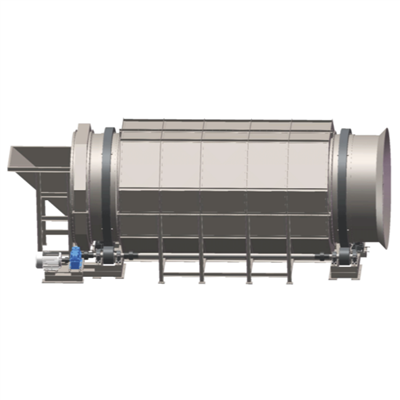
Hey there! As a supplier of Rotary Drum Screens, I know how crucial it is to keep tabs on the operation status of these machines. In this blog, I'll share some practical tips on how to monitor the operation status of a Rotary Drum Screen effectively.
Why Monitoring is Important
First off, let's talk about why monitoring the Rotary Drum Screen is so important. A Rotary Drum Screen is a key piece of equipment in wastewater treatment plants, industrial processes, and other applications where solid - liquid separation is needed. By constantly monitoring its operation, you can prevent breakdowns, ensure efficient performance, and save on maintenance costs in the long run.


Visual Inspection
One of the simplest and most straightforward ways to monitor a Rotary Drum Screen is through visual inspection. Regularly walk around the machine and check for any obvious signs of wear and tear. Look at the drum itself. Is the mesh intact? Any holes or tears in the mesh can lead to poor screening performance, allowing solids to pass through that should be retained.
Check the drive system. The belts, chains, and gears that power the drum should be in good condition. Loose belts or chains can cause the drum to rotate unevenly, reducing the efficiency of the screening process. Also, look for any signs of excessive wear on the gears, such as chipped teeth.
Inspect the bearings. Over time, bearings can wear out, leading to increased friction and potentially causing the drum to seize up. Listen for any unusual noises coming from the bearings while the machine is running. A grinding or squealing noise is a clear indication that something might be wrong.
Flow Rate Monitoring
Another important aspect of monitoring is keeping an eye on the flow rate of the incoming wastewater or other liquid being screened. You can use flow meters to measure the amount of liquid entering the Rotary Drum Screen. A sudden drop in the flow rate could mean that the screen is clogged. On the other hand, a significant increase in the flow rate might indicate a problem with the upstream equipment or an issue with the valve controlling the flow.
If you notice a change in the flow rate, you need to take immediate action. For a clogged screen, you may need to stop the machine and clean the mesh. If it's an issue with the upstream equipment, you'll have to troubleshoot and fix that problem.
Differential Pressure Monitoring
Differential pressure monitoring is a great way to determine if the screen is getting clogged. The differential pressure is the difference in pressure between the inlet and the outlet of the Rotary Drum Screen. As the screen accumulates solids, the resistance to the flow of liquid increases, causing the differential pressure to rise.
You can install pressure sensors at the inlet and outlet of the screen to measure the differential pressure. Set up an alarm system so that when the differential pressure exceeds a certain threshold, you're immediately notified. This way, you can address the clogging issue before it causes major problems.
Motor Current Monitoring
The motor that drives the Rotary Drum Screen is a critical component. Monitoring the motor current can give you valuable insights into the operation of the machine. An increase in the motor current could indicate that the drum is having trouble rotating, perhaps due to a clogged screen or a mechanical problem.
You can use a current meter to measure the motor current. Keep a record of the normal operating current of the motor under different conditions. If you notice a significant deviation from the normal current, it's time to investigate further.
Temperature Monitoring
Monitoring the temperature of various components of the Rotary Drum Screen is also essential. High temperatures can be a sign of excessive friction or other problems. For example, the bearings can get very hot if they're not properly lubricated or if they're worn out.
You can use temperature sensors to monitor the temperature of the bearings, the motor, and other critical components. Just like with the other monitoring parameters, set up an alarm system to alert you when the temperature exceeds a safe level.
Associated Equipment and Compatibility
In many wastewater treatment setups, the Rotary Drum Screen works in conjunction with other equipment. For instance, it might be followed by a UASB Anaerobic Reactor or a Wastewater Treatment Screw Press. It's important to ensure that the Rotary Drum Screen is operating in harmony with these associated equipment.
If the Rotary Drum Screen is not performing well, it can have a cascading effect on the downstream equipment. For example, if the screen doesn't remove enough solids, it can cause problems for the UASB Anaerobic Reactor, reducing its efficiency.
Also, consider the compatibility of the Rotary Drum Screen with other screening equipment in the plant, such as a Micro Screen Filter. Different screens have different screening capabilities, and they need to work together seamlessly to achieve the desired level of solid - liquid separation.
Maintenance and Calibration
Regular maintenance is key to ensuring accurate monitoring. Make sure to clean the sensors and meters regularly to prevent any build - up of debris that could affect their accuracy. Calibrate the sensors and meters at regular intervals to ensure that they're providing reliable data.
For example, if the flow meter is not calibrated correctly, you might get inaccurate flow rate readings, which could lead to incorrect decisions about the operation of the Rotary Drum Screen.
Conclusion
Monitoring the operation status of a Rotary Drum Screen is a multi - faceted process that involves visual inspection, flow rate monitoring, differential pressure monitoring, motor current monitoring, and temperature monitoring. By implementing these monitoring techniques, you can ensure that your Rotary Drum Screen operates efficiently and reliably.
If you're in the market for a high - quality Rotary Drum Screen or need more information on how to monitor and maintain it, don't hesitate to reach out. We're here to help you make the most of your wastewater treatment equipment. Whether you're a small - scale operation or a large industrial plant, we've got the solutions for you. Contact us today to start a conversation about your specific needs and how our Rotary Drum Screens can fit into your system.
References
- Smith, J. (2020). Wastewater Treatment Equipment Handbook. Publisher Name.
- Johnson, A. (2019). Monitoring and Maintenance of Industrial Screening Machines. Journal of Industrial Equipment Management, 15(2), 45 - 52.
- Brown, C. (2018). Practical Guide to Rotary Drum Screen Operation. Technical Press.