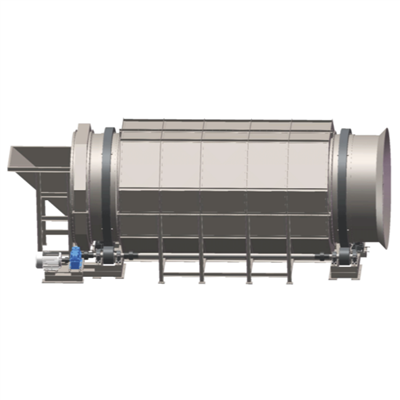
When it comes to the pulp and paper industry, a Rotary Drum Digester plays a crucial role in the pulping process. It is a key piece of equipment that helps in breaking down wood chips or other fibrous materials into pulp. However, choosing the right size of a Rotary Drum Digester is not a straightforward task. It requires a comprehensive understanding of various factors to ensure optimal performance, efficiency, and cost - effectiveness. As a supplier of Rotary Drum Digesters, I'd like to share some insights on how to make this important decision.
Production Capacity Requirements
The first and most obvious factor to consider is the production capacity you need. This is directly related to the amount of pulp you plan to produce on a daily, weekly, or monthly basis. If your mill has a high - volume production target, you will need a larger Rotary Drum Digester. For example, a large - scale pulp mill that aims to produce thousands of tons of pulp per month will require a digester with a large internal volume. On the other hand, a small - scale operation with a limited production target can opt for a smaller digester.


To calculate the required production capacity, you need to take into account the market demand for your pulp products, your mill's operational hours, and the efficiency of the overall pulping process. You can start by analyzing your historical production data if you are an existing mill. If you are setting up a new mill, market research and feasibility studies can provide valuable information about the expected production volume.
Material Characteristics
The type and characteristics of the raw materials you use also have a significant impact on the size of the Rotary Drum Digester. Different types of wood chips or fibrous materials have different densities, moisture contents, and reactivity. For instance, hardwood chips are generally denser and more difficult to break down compared to softwood chips. As a result, if you are using hardwood as your raw material, you may need a larger digester to ensure sufficient residence time for the pulping process.
Moisture content is another important factor. High - moisture materials require more energy to heat up and may also affect the chemical reactions during pulping. If your raw materials have a high moisture content, you might need a larger digester to accommodate the additional volume and to ensure proper heat transfer and chemical penetration.
Chemical Requirements
The pulping process involves the use of various chemicals, such as cooking liquor. The amount of chemicals required is proportional to the amount of raw materials being processed. A larger digester will need more chemicals to achieve the desired pulping results. However, it is also important to consider the chemical recovery system in your mill. If your chemical recovery system has a limited capacity, a very large digester may lead to inefficiencies in chemical management.
You need to work closely with your chemical suppliers and process engineers to determine the optimal chemical - to - raw - material ratio for your specific pulping process. This will help you select a digester size that can balance the chemical requirements and the overall cost - effectiveness of the operation.
Space and Infrastructure
The physical space available in your mill is a practical constraint when choosing the size of a Rotary Drum Digester. A large digester requires more floor space and may also need a higher ceiling height due to its vertical or horizontal dimensions. You need to ensure that there is enough space for installation, operation, and maintenance of the digester.
In addition to the floor space, you also need to consider the infrastructure requirements. A larger digester may require a more powerful heating system, a larger pumping system for chemical circulation, and a more robust support structure. You need to evaluate your existing infrastructure and determine if it can support the operation of a larger digester. If not, you may need to make additional investments in upgrading your infrastructure.
Energy Efficiency
Energy consumption is a major cost factor in the pulp and paper industry. The size of the Rotary Drum Digester can have a significant impact on energy efficiency. A larger digester may require more energy to heat up and maintain the desired temperature during the pulping process. However, in some cases, a larger digester can also be more energy - efficient on a per - unit - of - production basis.
This is because larger digesters can have better insulation and more efficient heat transfer systems. They can also take advantage of economies of scale in energy consumption. For example, a large digester may require less energy per ton of pulp produced compared to a small digester. You need to conduct a detailed energy analysis to compare the energy consumption of different - sized digesters and to select the one that offers the best energy efficiency for your production requirements.
Future Expansion Plans
It is always a good idea to consider your future expansion plans when choosing the size of a Rotary Drum Digester. If you expect your production volume to increase in the future, it may be more cost - effective to invest in a larger digester from the start. This can save you the cost and disruption of replacing a small digester with a larger one later.
However, you also need to balance the potential for future expansion with the initial investment cost. Over - sizing the digester can lead to higher upfront costs and under - utilization of the equipment in the short term. A careful assessment of your growth projections and market trends can help you make a more informed decision.
Related Equipment Compatibility
The Rotary Drum Digester is just one part of the overall pulping system. It needs to be compatible with other equipment in your mill, such as the Rotating Drum Screen, Screw Digester, and White Water Treatment System. The size of the digester should be coordinated with the capacity and throughput of these related equipment.
For example, if your Rotary Drum Screen has a limited capacity, a very large digester may produce more pulp than the screen can handle, leading to bottlenecks in the process. You need to ensure that all the equipment in your pulping system can work together smoothly to achieve the desired production efficiency.
Conclusion
Choosing the right size of a Rotary Drum Digester is a complex decision that requires careful consideration of multiple factors. By taking into account production capacity requirements, material characteristics, chemical requirements, space and infrastructure, energy efficiency, future expansion plans, and related equipment compatibility, you can make an informed choice that will optimize the performance and cost - effectiveness of your pulping operation.
As a supplier of Rotary Drum Digesters, we have extensive experience in helping our customers select the most suitable equipment for their specific needs. Our team of experts can provide you with detailed technical advice, conduct on - site assessments, and offer customized solutions. If you are in the process of choosing a Rotary Drum Digester or have any questions about our products, we encourage you to contact us for a consultation. We look forward to working with you to achieve your pulping goals.
References
- "Pulp and Paper Manufacture" - A comprehensive textbook on the pulp and paper industry that covers various aspects of pulping equipment and processes.
- Industry reports from leading market research firms that provide insights into the trends and best practices in the pulp and paper sector.
- Technical papers published in professional journals related to the pulp and paper industry, which often contain case studies and research findings on Rotary Drum Digester design and operation.